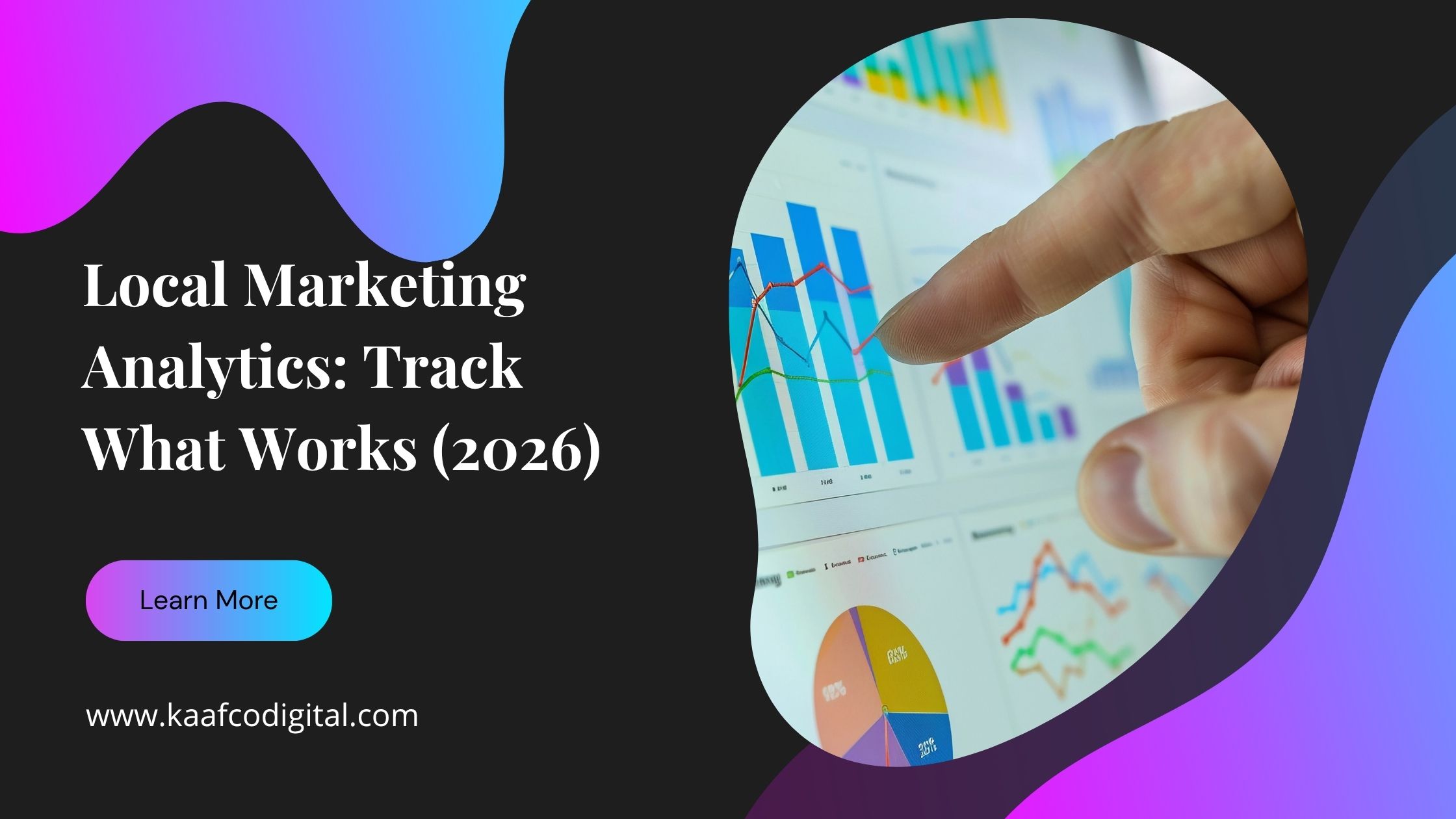
“I know half my marketing works, I just do not know which half.” I hear a version of this from almost every local business owner I meet. They are spending money on ads, SEO, social posts and a bit of everything, but they cannot say with any confidence what is actually bringing customers through the door.
That uncertainty is expensive. It means good campaigns get cut and weak ones keep getting funded. The fix is not a fancy, costly tool. It is a simple, consistent approach to local marketing analytics. Here is the exact setup I use to help local businesses see what works, drop what does not, and put more money behind the winners.
Why Most Local Businesses Are Flying Blind
The problem is rarely a lack of data. It is too much of the wrong data. Dashboards fill up with impressions, likes, reach and clicks, none of which pay the bills. Meanwhile the numbers that matter, like how many enquiries turned into paying customers and what each one cost to win, are nowhere to be seen.
On top of that, the customer journey is messy. Someone might find you on Google, check your Instagram, read a review, then call you a week later. Without a little tracking, all of that just looks like a phone call from nowhere. Fix the tracking and the fog clears surprisingly fast.
The Only Metrics That Actually Matter
Forget vanity metrics. For a local business, I care about a short list:
- Leads – calls, form submissions, bookings and messages.
- Cost per lead – how much you spent to generate each enquiry.
- Conversion rate – how many leads turn into paying customers.
- Cost per customer – the real price of winning a new client.
- Revenue and return – what those customers are actually worth to you.
When you know these five numbers by channel, you can make confident decisions. Everything else is interesting at best and a distraction at worst.
The Simple Tracking Stack I Set Up
1. Google Analytics 4 (GA4)
GA4 is free and shows how people find and use your website. The key is to set up conversion events for the actions that matter, such as form submissions, clicks to call, and clicks to your booking system, rather than just watching page views drift up and down.
2. Google Business Profile insights
Your profile tells you how many people called, requested directions or visited your site straight from Google. For local businesses this is often the single biggest source of enquiries, so it deserves close attention.
3. Call tracking
If the phone is how customers reach you, you need to know which marketing made it ring. Call tracking numbers show whether a call came from your Google listing, an ad or your website, so phone enquiries stop being invisible in your reports.
4. Form and booking tracking
Every contact form and booking should fire a tracked event. That way you can see not just how many enquiries you received, but exactly where each of them came from.
5. UTM tags and one simple dashboard
UTM tags are small labels you add to links so you can see which post, email or ad sent each visitor. Feed all of this into one simple dashboard, or even a spreadsheet, and you finally have a single place to see the truth.
How to Connect Spend to Actual Customers
Tools only take you so far. The most powerful question in local marketing is still the simplest: “How did you hear about us?” Ask every new customer, write the answer down, and review it each month. Combined with your tracking, this closes the gap between a click on a screen and a real paying customer.
You do not need perfect attribution. You need enough of a picture to know which two or three channels are pulling their weight, and which are quietly draining your budget every month.
A 30-Minute Monthly Review Routine
Consistency beats complexity. Once a month, I sit down and do this:
- Pull leads by channel from GA4, your Google Business Profile and call tracking.
- Note how many became customers and what they were worth.
- Work out cost per lead and cost per customer for each channel.
- Decide one thing to do more of and one thing to stop doing.
Half an hour a month is enough to steer your marketing with real evidence instead of gut feel.
Common Tracking Mistakes to Avoid
A few traps catch people out again and again. Do not judge channels on clicks alone, because clicks are not customers. Do not change five things at once, or you will never know what actually worked. And do not ignore the offline conversation, because “how did you hear about us” often reveals what the software quietly misses.
Frequently Asked Questions
Do I need expensive analytics software?
No. GA4, your Google Business Profile, a call tracking number and a simple spreadsheet cover most local businesses very well. Start there before you pay for anything fancy.
How often should I check my numbers?
A focused monthly review is plenty for most local businesses. Checking daily usually creates noise and knee-jerk decisions rather than clarity.
What if my customers come mostly by phone?
Then call tracking is the first thing to set up. Without it, your most important channel is completely invisible in your reporting.
Start Small, Then Build
You do not have to set all of this up in a single afternoon. If you are starting from scratch, begin with the two things that reveal the most: conversion tracking in GA4 and a way to see where your phone calls come from. Those two alone will teach you more about your marketing than any report you have seen so far.
Once those are running and you trust the numbers, add call tracking detail, UTM tags and your monthly review. Each step compounds, and within a couple of months you will have a clear, honest picture of what earns your money back and what does not.
The Bottom Line
You cannot improve what you cannot measure, and guessing is the most expensive marketing strategy there is. A simple, consistent tracking setup turns your marketing from a leap of faith into a set of confident decisions. Track the five numbers that matter, review them monthly, and invest behind the channels that genuinely bring customers.
If you would like this set up properly, I can help. See how I work across my digital marketing services, or get in touch for a free audit and I will show you what your numbers are really telling you.