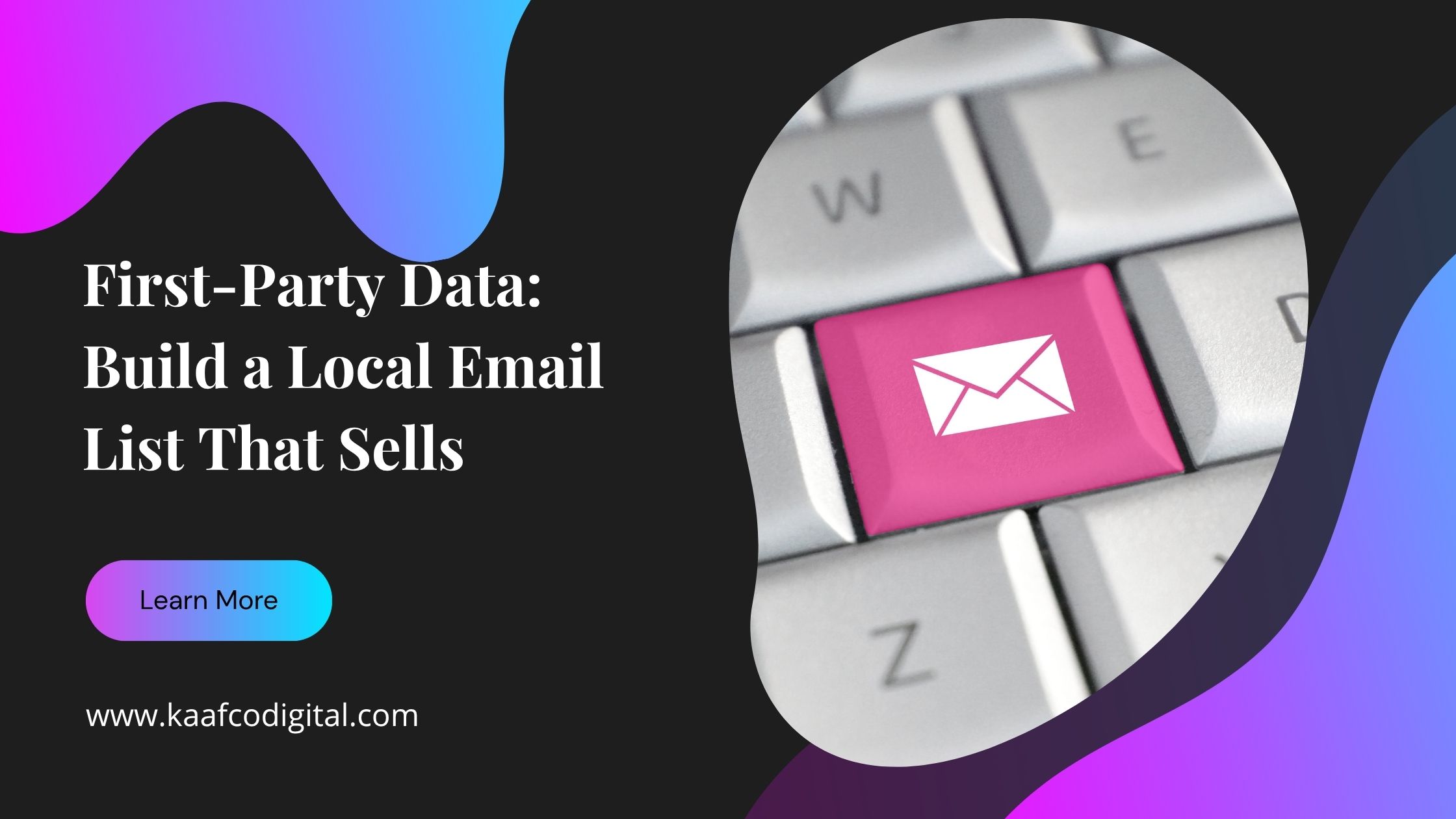
If all your customers live inside someone else’s platform, you do not really own your audience – you rent it. Social media reach can be throttled overnight, ad costs keep climbing, and third-party cookies that once powered easy retargeting are disappearing. The local businesses that will thrive in 2026 are the ones that own their audience directly. That means first-party data, and above all, an email list.
This is one of the highest-value, lowest-cost things a local business can build, and yet it is the one I see neglected most often. Here is what first-party data really means, why it matters now, and exactly how I help local businesses build an email list that reliably brings customers back.
What Is First-Party Data, in Plain English?
First-party data is information your customers give you directly: their name, email address, phone number, what they bought, and what they are interested in. You own it, you can use it whenever you like, and no platform can take it away or charge you to reach it.
Compare that with third-party data, which is information collected by other companies and rented out through advertising. That model is being dismantled by privacy rules and browser changes. First-party data is the durable, future-proof alternative, and it is completely within your control.
Why It Matters More Than Ever in 2026
Three things have converged. Third-party cookies are being phased out, so the old retargeting tricks work less well. Social platforms keep reducing organic reach, so followers do not guarantee visibility. And ad costs continue to rise, so renting attention gets more expensive every year.
Against that backdrop, a direct line to people who already like your business is priceless. When you own your audience, a quiet week is something you can fix with a single email rather than a bigger ad budget.
Email Is Still the Highest-ROI Channel for Local Businesses
Email is not glamorous, but it consistently returns more per pound than almost any other channel. It reaches people who already know you, it lands in a space they check every day, and it costs very little to send. For a local business, a healthy email list is like having a list of warm customers you can invite back any time you have capacity to fill or an offer to share.
How to Build Your Email List the Right Way
1. Give people a real reason to sign up
Nobody joins a list to “receive our newsletter.” Offer something worth having: a first-order discount, a useful local guide, early access to appointments, or entry into a genuine prize draw. Make the value obvious and immediate.
2. Capture details at every touchpoint
Add a simple sign-up form to your website, ideally on your busiest pages. Collect emails at the point of sale, on bookings, and after a job well done. Every happy customer is a chance to stay in touch.
3. Use your website as the hub
Your site should make joining effortless. A clear, friendly sign-up box with a strong reason to subscribe will quietly grow your list every single day, especially if your site already attracts local search traffic.
4. Capture in person, too
If you have a shop, a stand or face-to-face appointments, ask. A tablet, a QR code or even a quick “shall I email your receipt and a little thank-you offer?” turns everyday interactions into list growth.
5. Keep it simple and compliant
Ask only for what you need, usually just a first name and email. Be clear about what people will receive, and always get proper consent. A clean, willing list of 200 beats a scraped list of 2,000 every time.
What to Actually Send
Once people are on your list, keep it useful and human. A warm welcome email sets the tone. After that, mix genuinely helpful tips, seasonal offers, local news and the occasional behind-the-scenes story. The goal is to be a welcome arrival in the inbox, not another business shouting for attention. If people look forward to hearing from you, your offers land far better when you send them.
Turning the List Into Sales
A list only pays off if you use it thoughtfully. Send consistently, so people do not forget you. Segment where it makes sense, for example separating past customers from new subscribers, so your messages feel relevant. And always include a clear next step: book now, reply to this email, or claim this offer before it ends. Relevant, regular, and with an obvious call to action – that is the whole formula.
Staying on the Right Side of GDPR
In the UK and EU, email marketing is governed by GDPR and related rules, so consent matters. Only email people who have agreed to hear from you, make it clear what they are signing up for, and include an easy way to unsubscribe in every message. Good practice here is not just legal safety – it also keeps your list engaged and your emails out of the spam folder.
Frequently Asked Questions
How big does my email list need to be?
Smaller than you think. For many local businesses, a few hundred genuinely interested local subscribers can drive real, repeatable revenue. Quality and relevance matter far more than raw size.
Which email tool should I use?
Start with an affordable, beginner-friendly platform with a free tier. The specific tool matters less than actually using it consistently and keeping your list clean and willing.
How often should I email my list?
Regularly enough to stay familiar, but never so often that you become noise. For most local businesses, somewhere between fortnightly and monthly is a comfortable, effective rhythm.
The Bottom Line
Renting your audience from social platforms and ad networks gets more expensive and less reliable every year. Owning it through first-party data and a healthy email list is one of the smartest, most durable investments a local business can make. Give people a real reason to join, treat their inbox with respect, and you will build an asset that brings customers back again and again.
If you would like help setting this up and making it pay, I can help. Take a look at how I work across my digital marketing services, or get in touch for a free audit and we will map out your list-building plan.